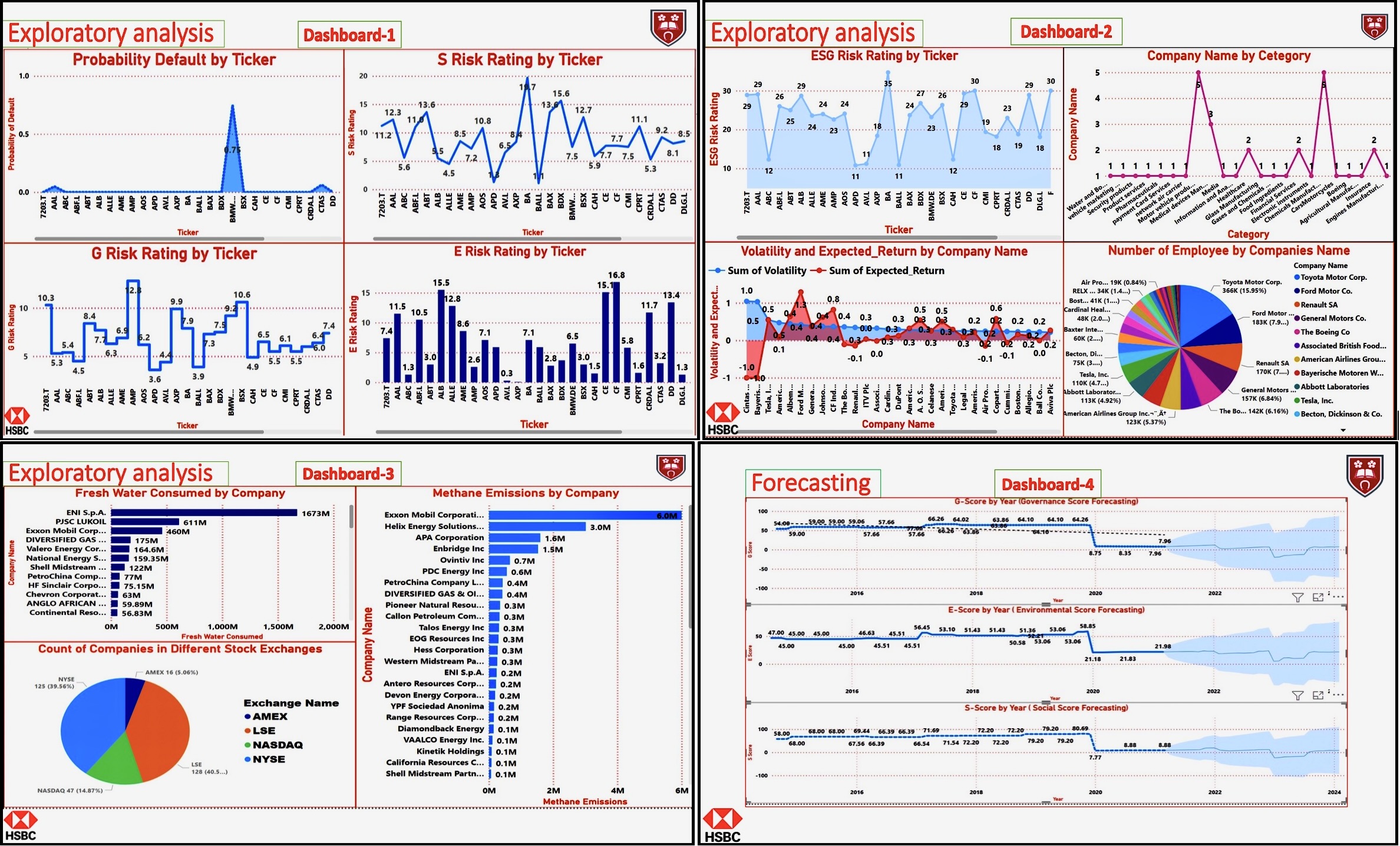
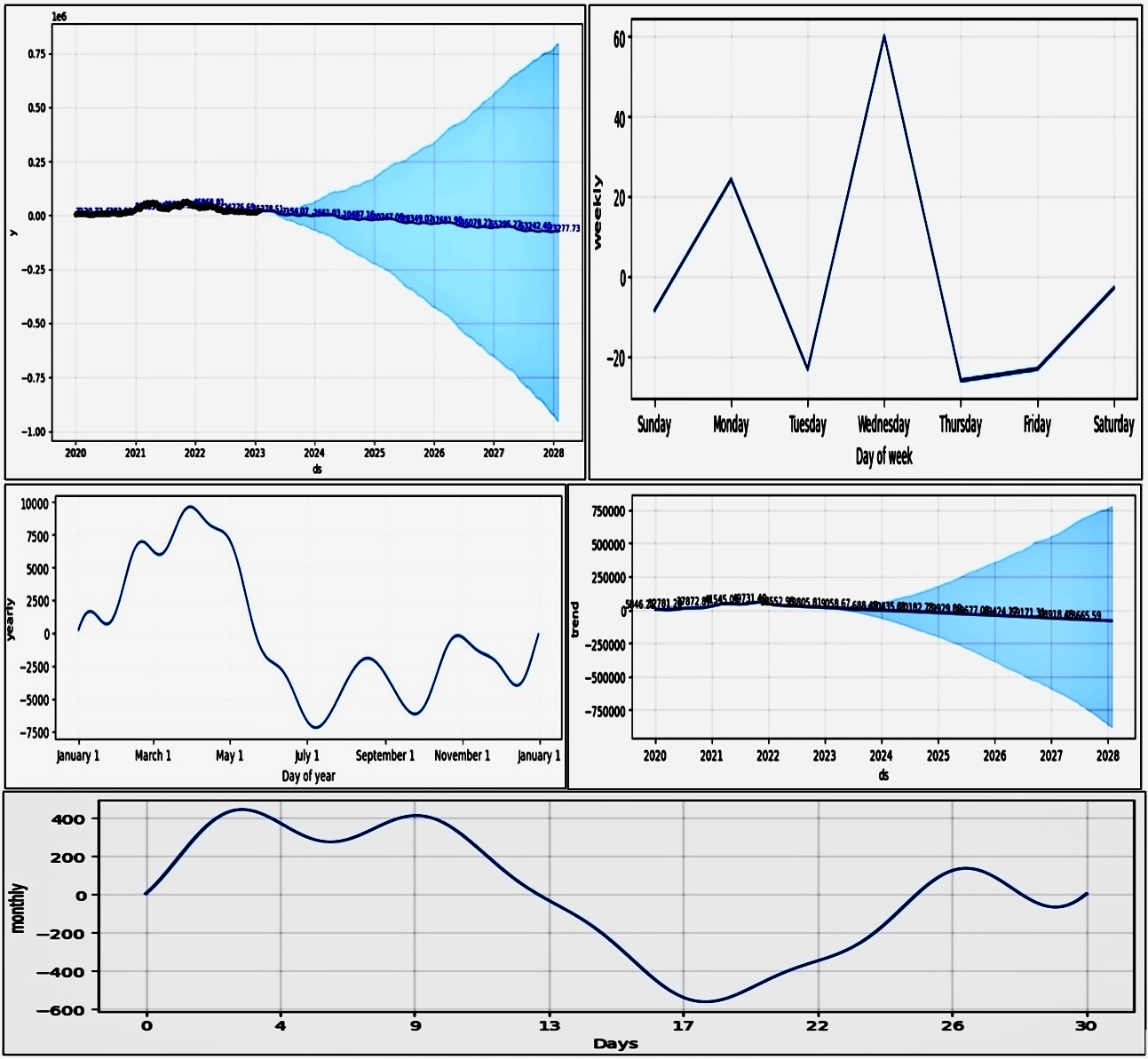
For cryptocurrency, we have chosen Bitcoin as the currency. We used the Prophet algorithm for the forecasting model in the computing section. As mentioned in the Introduction, our major objective is to investigate the impact of using Twitter data for predictions in diverse domains, either in conjunction with or independently of different machine learning models that are widely used in the Deep Learning field. As a result, following the previously described tweet processing, we are left with two distinct series: the Twitter series (price or date) and the target price series, which we are trying to anticipate. The forecast results from the Prophet model show a time series of Bitcoin market price predictions. The forecast includes daily predictions ('ds'), 'ds' mean date with an associated predicted value ('yhat'), and 'yhat' mean price in the Y-axis as a dependent variable, along with lower ('yhat lower') and upper ('yhat upper') bounds for these predictions. The results indicate a declining trend in Bitcoin prices over the forecast period in Figure 16 Bitcoin Price Forecasting Dashboard extending up to the year 2028. From the values provided, we see predictions starting from January 1, 2020, with an initial forecasted price ('yhat') of approximately $7120.72, and by the end of the forecast period on January 29, 2028, the predicted price drops to around -$74035.19. These negative values for the 'yhat' in the latter years are not feasible for actual Bitcoin prices and may indicate an anomaly in the data, an overfitting issue, or limitations within the model when extrapolating far into the future. The result provides a predictive baseline for the Bitcoin market price based on historical data. This baseline can be critical for the project as it establishes the expected market behavior without external sentiment influence, which could be compared against models that do include sentiment data for a more comprehensive analysis. The project aims to explore the influence of Twitter sentiment on Bitcoin prices. While these results do not directly measure that influence, they offer a starting point for understanding market trends that sentiment analysis could build upon. To align the forecast results with the project's aim, future research would need to include sentiment data as a variable in the prediction model to measure its impact against the baseline established by these results. The forecasted data from the Prophet model provides a quantitative foundation for future research that aims to integrate additional variables, such as public sentiment from Twitter, to enhance the accuracy and relevance of Bitcoin market predictions. Models taken into consideration in the experiments have been selected based on the fact that this is a binary classification problem
.jpeg)